Why Two People at the Same Body Fat Percentage Look Different?

If you’ve ever thought, “We’re both around 15%, but they look way leaner than me,” you’re not imagining things. Body fat percentage alone doesn’t determine appearance.
This guide explains the main factors that change how body fat looks — and how to estimate your own body fat more realistically.

Body fat percentage is a number — appearance is context
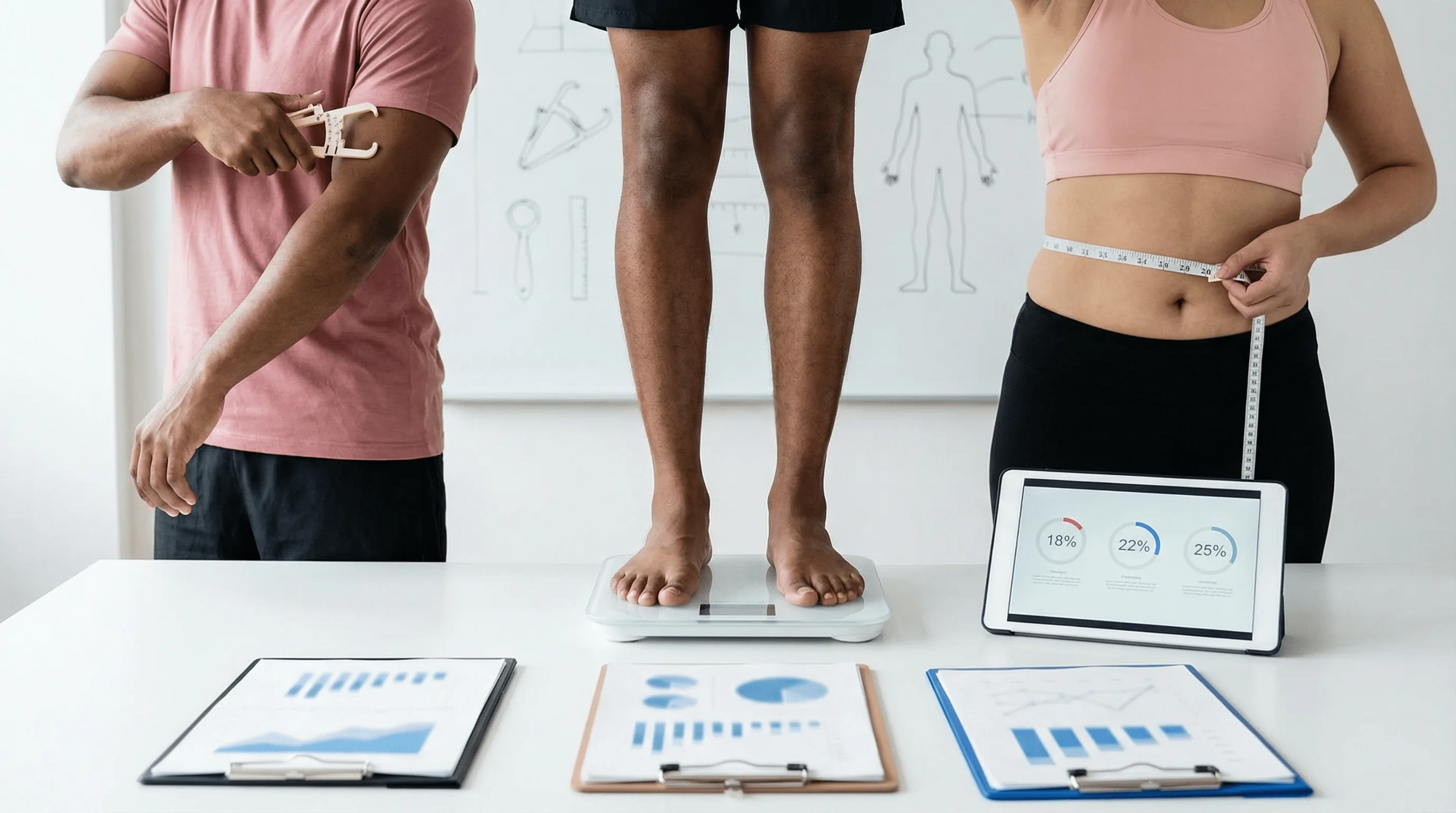
Body fat percentage estimates how much of your body mass comes from fat. It does not describe how that fat is distributed, how much muscle you have, or how your frame carries it.
That’s why two people can share the same estimated body fat percentage and look noticeably different in the mirror or in photos.
Muscle mass changes everything
Muscle mass is the biggest visual modifier. More muscle spreads fat over a larger surface area, often making someone look leaner at the same body fat percentage.
This is why athletes and lifters can look “lean” at percentages that might look soft on someone with less muscle.
Common mistake: assuming a lean-looking person must have a much lower body fat percentage, when muscle is doing most of the visual work.
Fat distribution matters more than the total
Some people store more fat in the midsection, while others store it in the hips, thighs, or lower body. Two people at the same percentage can look very different depending on where fat shows up first.
Central fat storage tends to look “softer” visually, especially in relaxed posture or flat lighting. Peripheral fat storage often looks leaner from the front, even at similar percentages.
To track waist-centered roundness directly, use the BRI Calculator alongside your usual body-fat method, and compare hip-height adiposity with the BAI Calculator.
Frame size and height affect perception
Taller individuals and those with wider frames often appear leaner at the same body fat percentage because fat is distributed over a larger area.
Shorter frames or narrower builds can make fat more visually obvious, even when total body fat percentage is similar.
If you want to quantify your skeletal build, use the Body Frame Size Calculator.
Genetics influence shape — not outcomes
Genetics influence fat storage patterns, limb proportions, and where definition appears first. This isn’t destiny — it’s variation.
The important takeaway is not comparison, but interpretation: understanding your own baseline helps you judge progress more accurately.
How to estimate your body fat more realistically
Because appearance varies so much, the most useful approach is to:
- Think in ranges, not single numbers
- Use visual references for context
- Track changes with consistent photos
- Avoid comparing yourself to posed or edited images
For scale trend context while you track appearance, add the BMI Calculator, Weight Loss Calculator, and Weight Loss Percentage Calculator. To set maintenance and calorie targets for that trend, use the TDEE Calculator and Calorie Deficit Calculator.