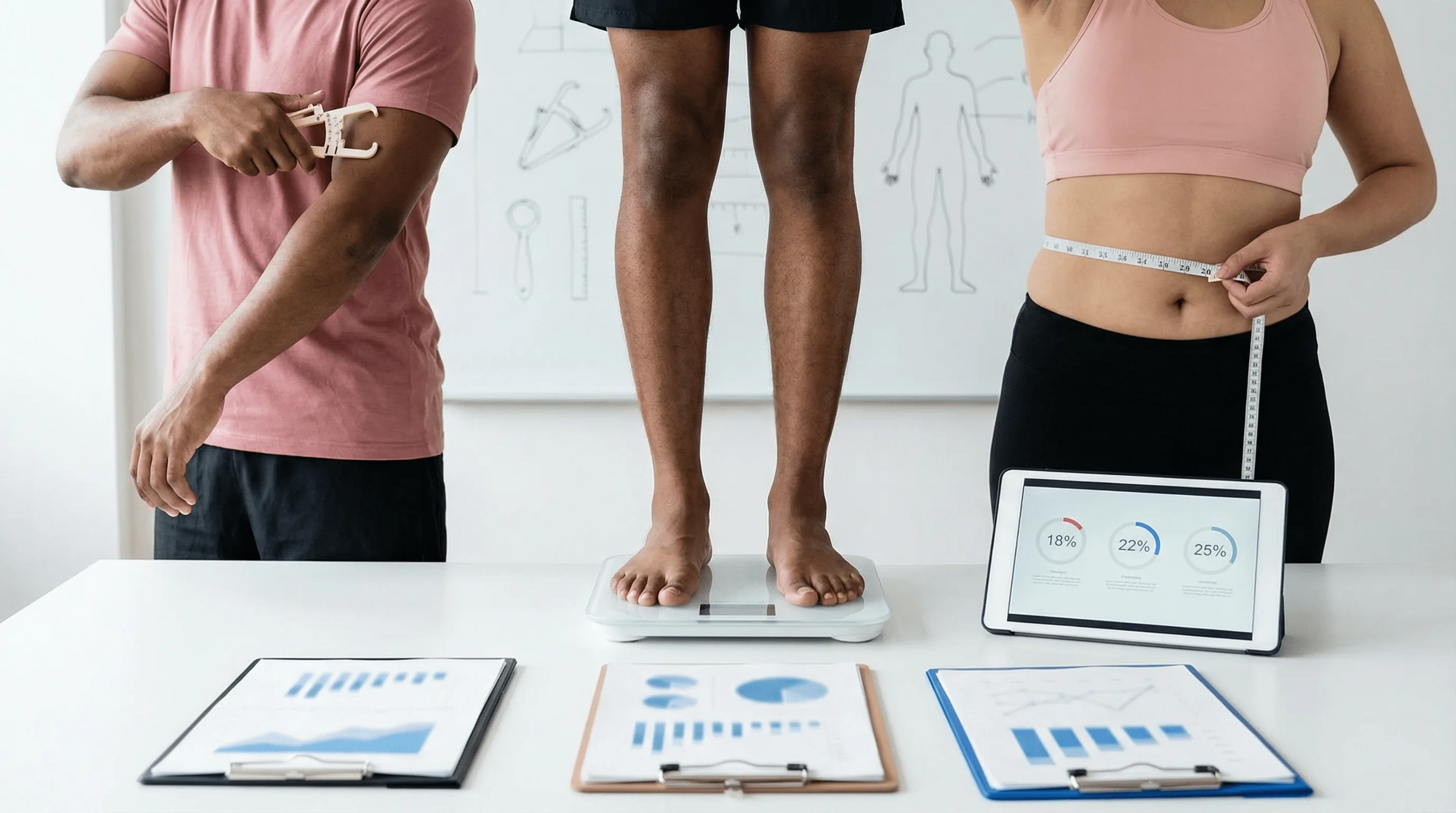
The 3 Best Ways to Measure Your Body Fat % at Home

The “best” body fat method is not the one with the fanciest science. It is the one you can repeat consistently enough to spot real trends.
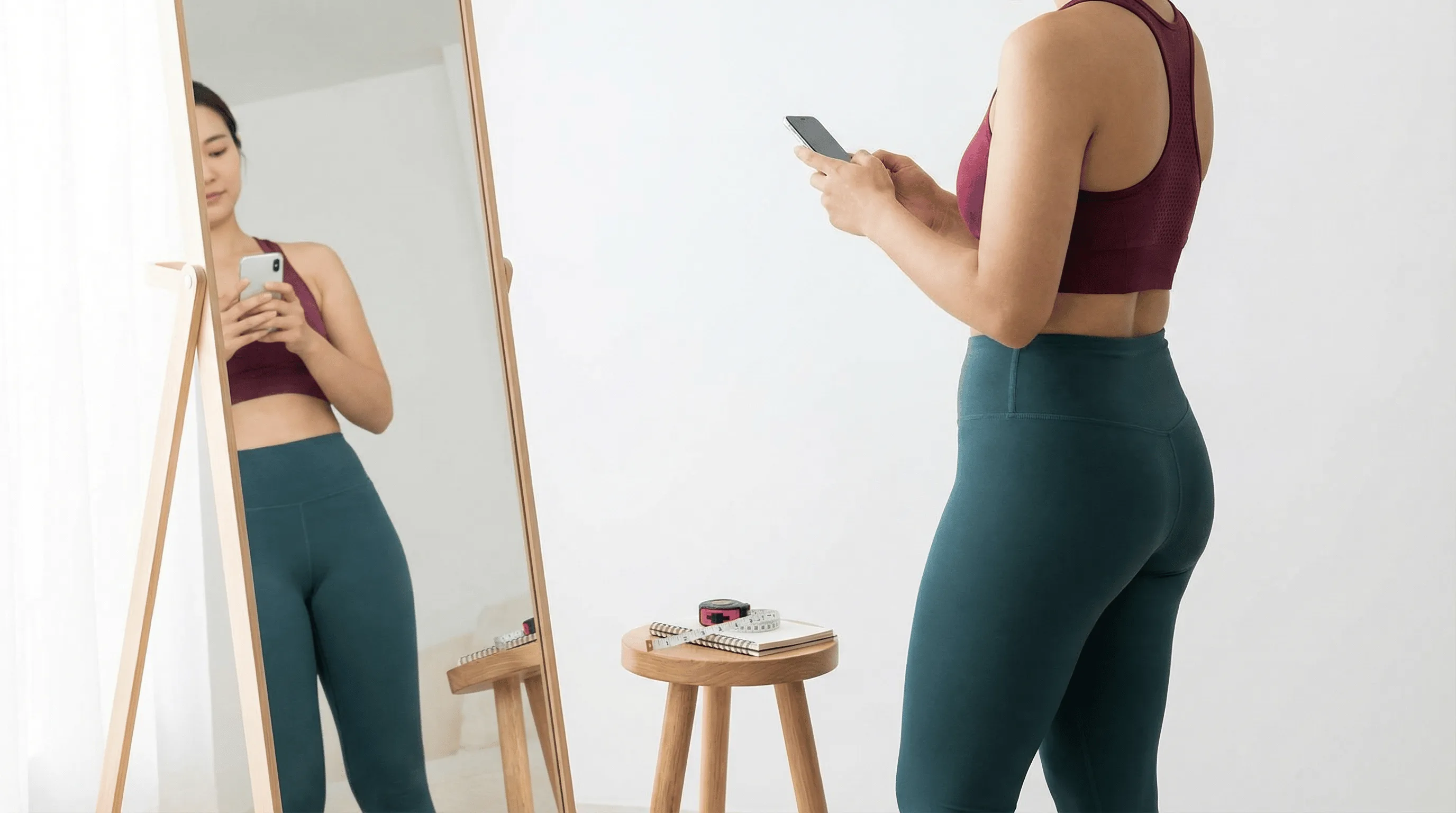
For most people at home, that winner is simple: consistent progress photos + AI estimation.
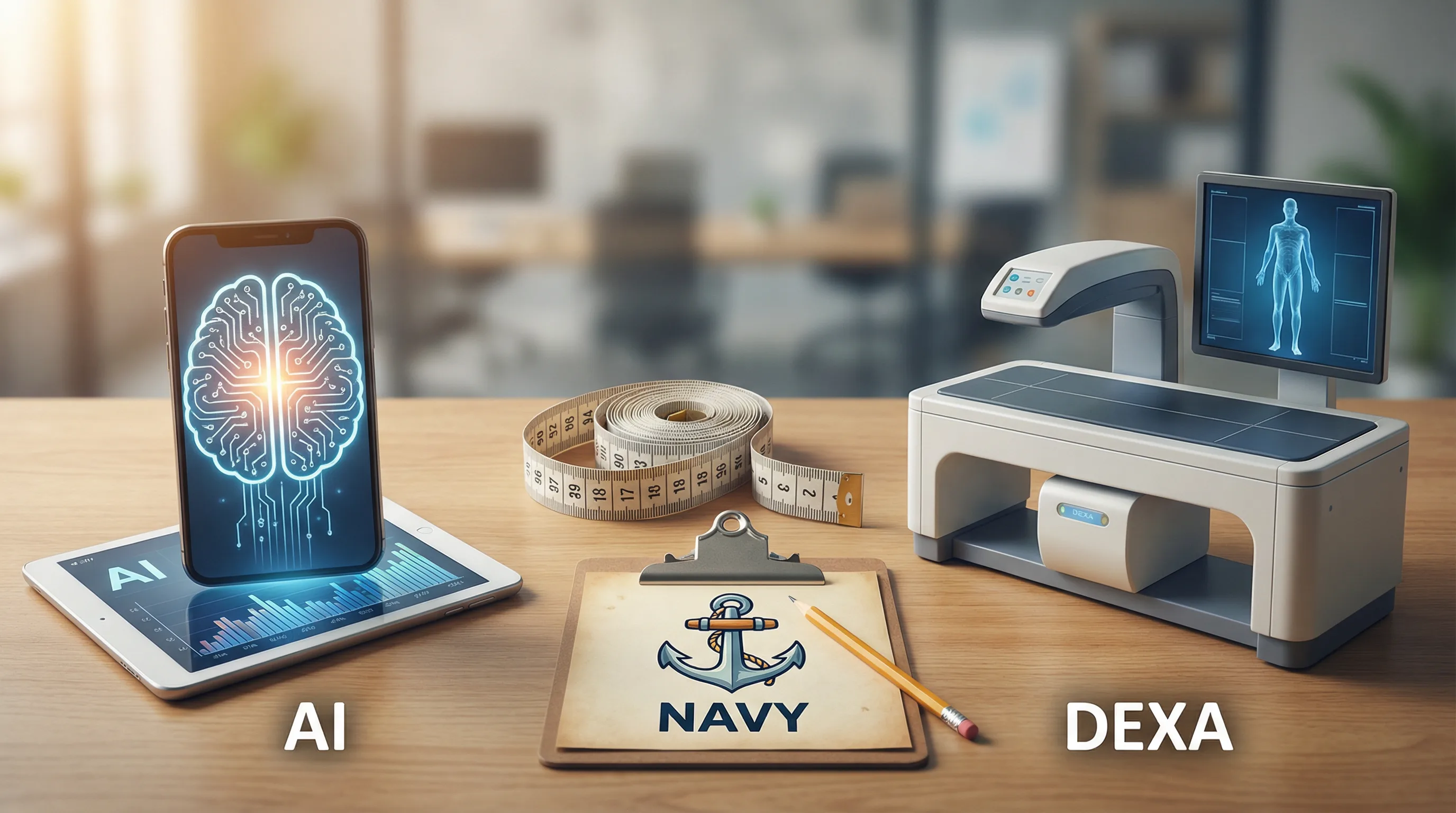
It is low effort, appearance-aligned, and usually better for trend tracking than methods that look more precise on paper. This guide explains why, plus when the Navy Method or DEXA scans still make sense.
What body fat % actually means
Body fat percentage is the proportion of your body made up of fat mass versus lean mass (muscle, organs, bone, and water).
The part most people miss: body fat % is not something you can measure perfectly at home. It is always an estimate, even with advanced tools.
That means the goal is not a perfect number. The goal is consistent measurement so you can track real change over time.
What best really means for tracking
When people ask for the best method, they are usually mixing three separate goals:
- Precision: How close is the result to a true value?
- Consistency: Can you repeat it reliably?
- Accessibility: Can you do it often enough to see trends?
At home, consistency usually beats precision. Fat loss happens slowly, often around 0.3% to 1% body weight per week, while measurement noise shows up fast from hydration, food intake, lighting, and small technique changes.
The most useful method is the one you can repeat under consistent conditions.
The 3 main methods (and when to use each)
#1: Consistent photos + AI estimation (best for real life)
AI photo-based estimation analyzes visual cues such as body proportions, fat distribution, muscle definition, and silhouette changes.
It does not measure fat tissue directly, and that is exactly why it works well for practical tracking. It aligns with what most people care about: how their body looks and whether it is improving.
- Why it works: low friction, easy repeatability, and strong trend signal under standardized photo conditions.
- Best for: fat loss phases, physique improvement, and weekly check-ins.
#2: The Navy Method (tape measurements)
The Navy Method estimates body fat from waist, neck, and hips (for women). It is low cost and easy to run at home with a tape measure.
You can run this in the Body Fat Calculator and compare broader body composition context with the Lean Body Mass Calculator, BRI Calculator, and BAI Calculator.
- Downsides: sensitive to small tape errors, relies on population averages, and can misread very muscular or lean physiques.
- Best for: budget tracking and people who prefer numeric estimates.
#3: DEXA scans (most precise, least practical)
DEXA scans use low-dose X-rays to estimate fat mass, lean mass, and bone density. They are often treated as a reference standard.
The tradeoff is practicality. DEXA is relatively expensive, harder to repeat often, and still affected by conditions such as hydration and protocol differences.
Best for: occasional baseline checks or a calibration point every few months. For pricing context, see How Much Does It Cost to Measure Body Fat?.
What body fat % looks like
Visual ranges are rough estimates, but they help explain why appearance-based tracking is useful in real life.
- 10% to 12%: visible abs, sharper definition.
- 15%: athletic look, faint abs.
- 18% to 20%: softer physique, less visible abdominal definition.
- 25%+: rounder look with more central fat storage.
The exact percentage is less important than direction of change over 3 to 4 weeks.
How to track body fat properly (step-by-step)
Most tracking errors come from inconsistent setup. Use this protocol:
- Take photos under identical conditions. Keep lighting, time of day, camera distance, and poses the same (front, side, back).
- Keep frequency low. One to two check-ins per week is enough; daily checks mostly add noise.
- Use the same method every time. Same tool, same angles, same process. Avoid switching methods mid-cut.
- Track trends, not single numbers. Ignore week-to-week noise and focus on 3 to 4 week direction.
If your photos look leaner over time, body fat is dropping, even if exact percentages fluctuate.
A simple weekly meal framework like the ones shared on Well Organic Health can make nutrition consistency easier, which improves trend quality.
Accuracy & limitations
No method is perfect. Each one fails in different ways:
- DEXA: can shift with hydration, scan protocol, and machine/software differences.
- Navy Method: assumes average body proportions; small tape errors can create large estimate swings.
- AI estimation: sensitive to lighting, camera angle, and posture; strongest for trends, weaker for exact single-point values.
The most useful method is not necessarily the most accurate in a lab. It is the most repeatable in your real routine.
Best method based on your goal
- Lose fat or improve appearance: photos + AI.
- Track numeric estimates: Navy Method.
- Get an occasional baseline: DEXA scan.
Quick comparison
| Method | Cost | Accuracy | Consistency | Best use |
|---|---|---|---|---|
| Photos + AI | Low | Moderate | High | Progress tracking |
| Navy Method | Low | Moderate | Medium | Numeric estimates |
| DEXA | High | High | Low | Occasional baseline |
If micronutrient coverage is hard during a deficit, this guide to the best greens powder on Amazon can help.
The verdict: what you should actually do
If your goal is at-home progress tracking, the #1 move is simple: take consistent photos and use the same estimation method every time.
DEXA can be a great one-time reference. The Navy Method can work if you measure carefully. But for most people, AI photo estimation wins because it’s repeatable and appearance-aligned.