Common Body Fat Estimation Methods Explained

There’s no single way to measure body fat — only different methods that trade precision, convenience, and cost. Understanding how each method works makes it easier to choose one you can actually use and interpret.
This guide explains the most common body fat measurement methods and when each one makes sense.
Why body fat measurement is harder than it sounds
Body fat isn’t something you can easily “measure” without indirect signals. Most methods estimate body fat based on proxies — like circumference, electrical resistance, or visual appearance.
That’s why different methods often disagree. They’re answering slightly different questions using different assumptions.
The Navy tape method
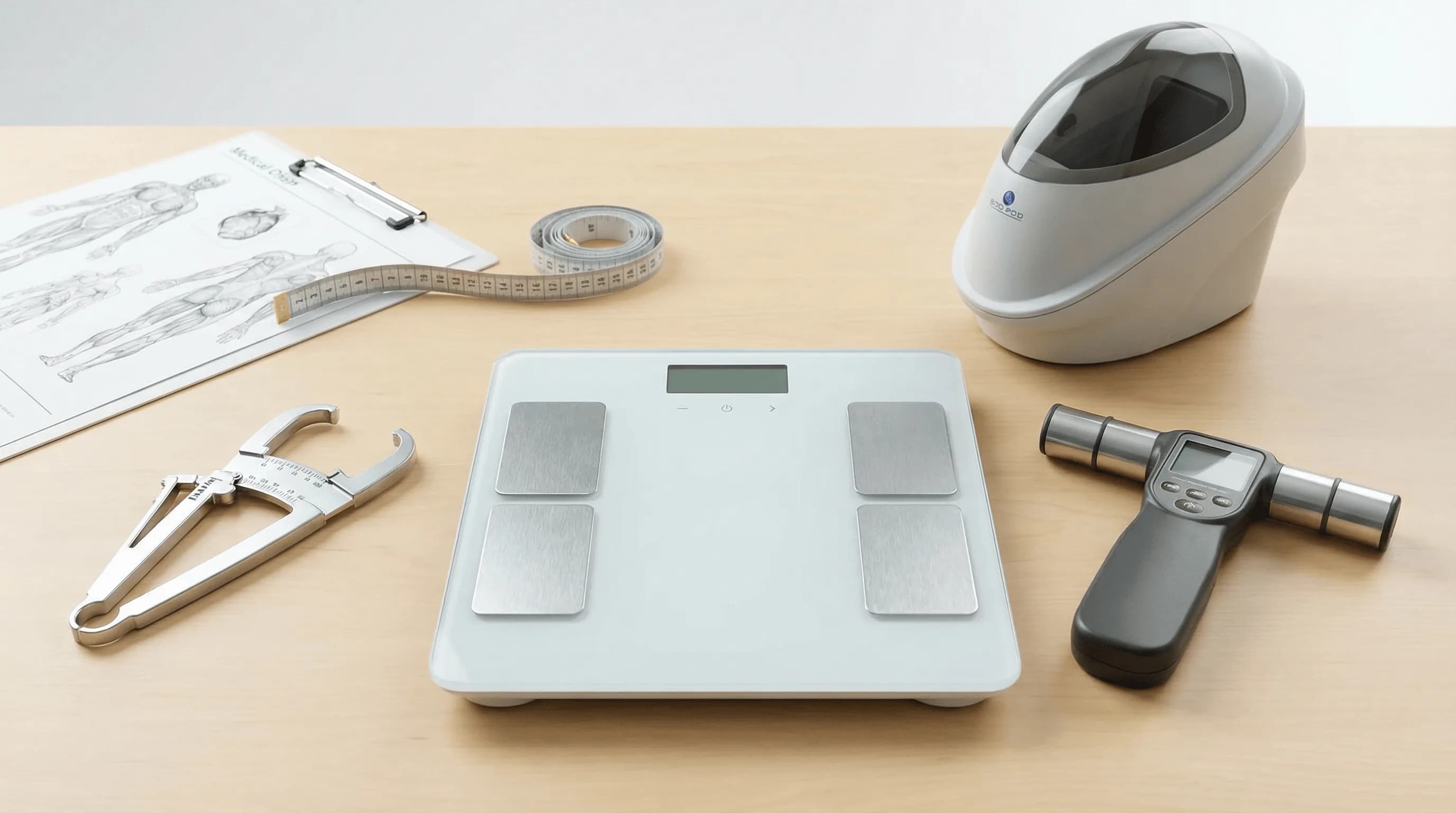
The Navy Method estimates body fat using tape measurements of the waist, neck, and sometimes hips. These measurements are plugged into a formula derived from population averages. You can test this with the Navy Body Fat Calculator or compare against the Army Body Fat Calculator. For a roundness-focused waist-height metric, compare with the BRI Calculator. For hip-height adiposity context, compare with the BAI Calculator.
It’s popular because it’s cheap and accessible. The downside is that small differences in tape placement or tension can noticeably change the result.
Best for: simple estimates when measured consistently the same way.
Skinfold calipers
Skinfold calipers estimate body fat by measuring the thickness of subcutaneous fat at specific sites on the body. These measurements are then converted into a body fat estimate using formulas. You can run this method in the Skinfold Body Fat Calculator.
When performed well, skinfolds can be useful for tracking changes. In practice, results depend heavily on technique and experience.
Best for: trained users who can follow a consistent protocol.
Bioelectrical impedance (BIA) smart scales
BIA scales estimate body fat by sending a small electrical current through the body and measuring resistance. The estimate is influenced by hydration, recent food intake, and temperature.
These scales are convenient and easy to use frequently, but results can fluctuate day to day due to non-fat factors. For a deeper breakdown, read How Accurate Are Smart Scales?.
Best for: spotting trends when measured under very similar conditions.
DEXA scans
DEXA scans use low-dose X-rays to estimate fat mass, lean mass, and bone density. They’re often treated as a reference standard for body composition.
DEXA is precise, but it’s expensive, time-consuming, and impractical for frequent tracking. Results can also vary slightly between machines.
Best for: occasional baseline measurements rather than routine use.
How to choose the right body fat method
The “best” method depends on what you want:
- Precision → lab-based scans
- Low cost → tape or calipers
- Convenience → smart scales
- Appearance tracking → visual or photo-based methods
For most people, the most useful method is the one they can repeat consistently and interpret realistically.
For scale-based target planning alongside these methods, use the BMI Calculator, Weight Loss Calculator, and Weight Loss Percentage Calculator. For maintenance and intake targets, add the TDEE Calculator and Calorie Deficit Calculator.