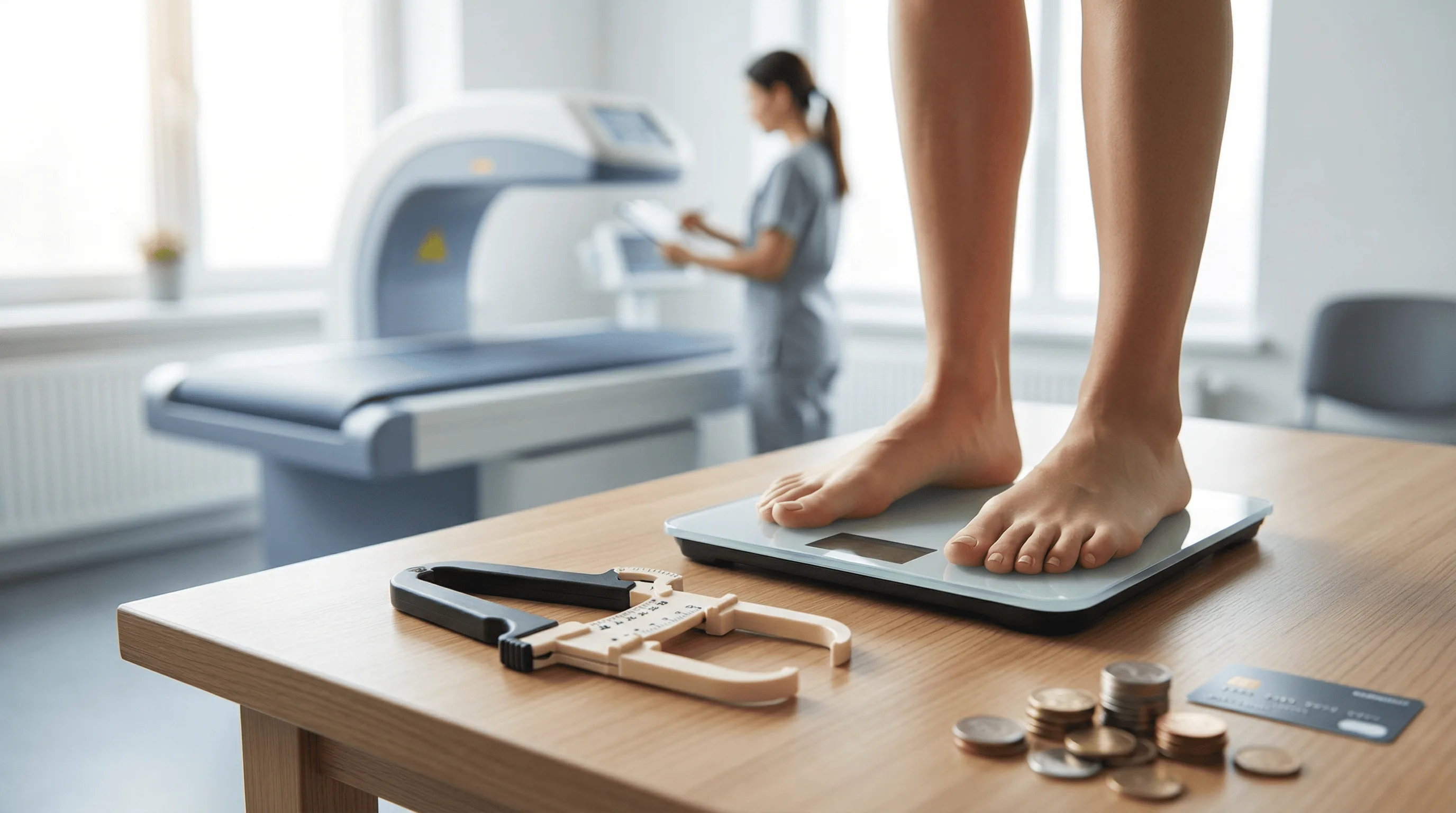
Why Body Fat Measurement Methods Give Different Results

It’s common to measure your body fat using two different methods and get two very different numbers — sometimes on the same day.
This isn’t a malfunction. It’s a consequence of how body fat is estimated, what each method measures, and the assumptions baked into each approach.
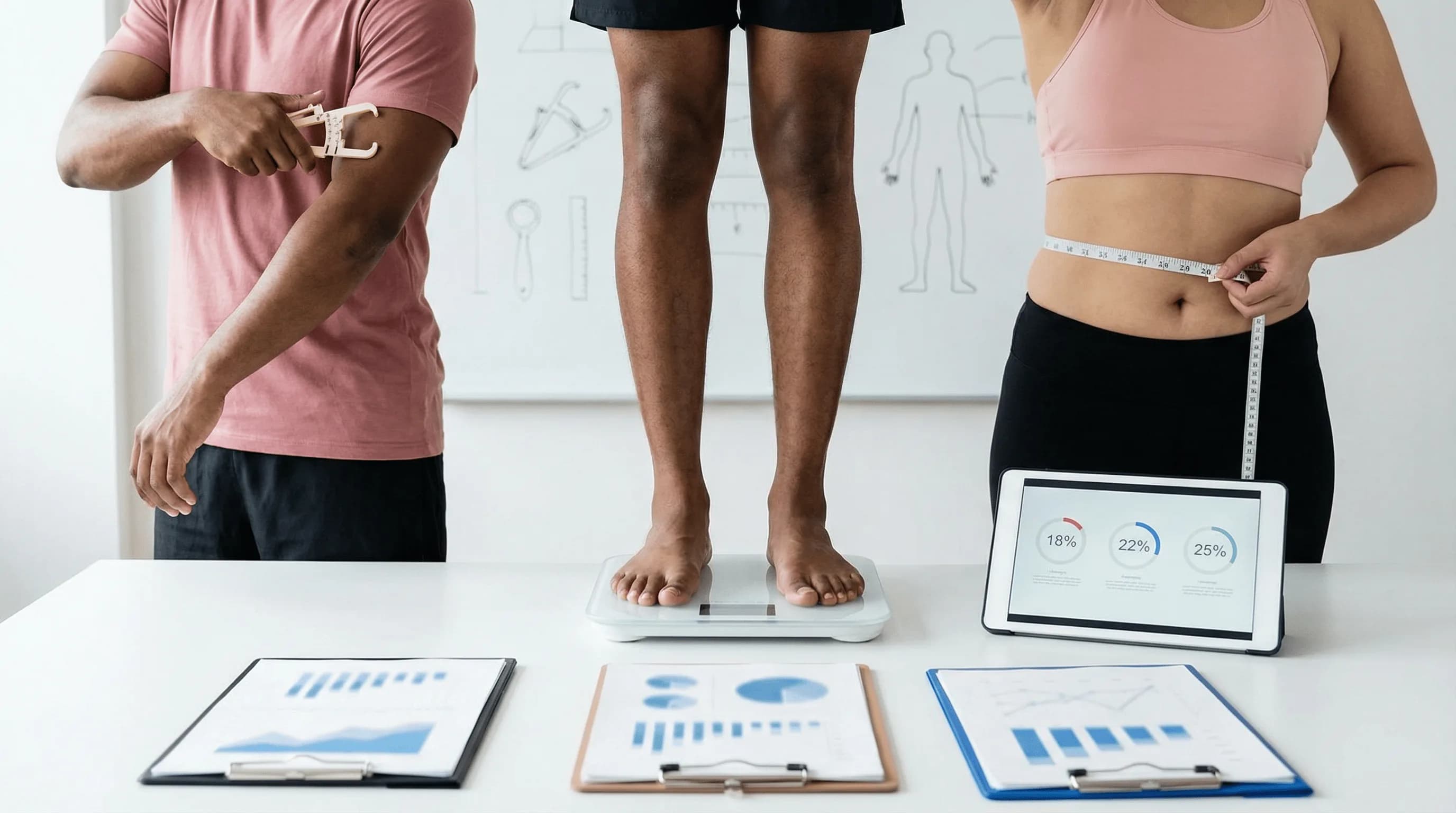
There is no single “true” body fat number
Body fat cannot be directly measured without invasive methods. Every common technique — from DEXA scans to smart scales — relies on indirect signals and assumptions.
When two methods disagree, it doesn’t mean one is broken. It means they’re answering different questions in different ways.
DEXA scans: precise, but not perfect
DEXA scans estimate body composition by measuring how X-rays pass through tissue. They’re often treated as a gold standard, but they still rely on models and calibration assumptions.
Hydration status, recent food intake, and machine differences can shift results by several percentage points — even between two scans.
Smart scales (BIA): highly sensitive to conditions
Bioelectrical impedance analysis (BIA) sends a small electrical current through the body and estimates fat based on resistance.
Hydration, sodium intake, time of day, exercise, and even skin temperature can all dramatically change readings — sometimes overnight.
Body fat calculators: population averages applied to individuals
Calculator-based methods use formulas derived from large population datasets. They estimate body fat based on height, weight, age, sex, and sometimes tape measurements.
These formulas work on average — and fail quietly at the individual level, especially for people with atypical muscle mass or fat distribution.
Visual and AI-based estimation: appearance-first by design
Visual estimation focuses on how body fat presents externally — shape, silhouette, and distribution — rather than attempting to infer internal composition.
Because most people judge progress visually, these methods often align better with perceived change, even if they don’t claim laboratory precision.
Why the numbers don’t line up
- Each method measures different physical signals
- Each relies on different assumptions
- Hydration and timing affect some methods more than others
- Muscle mass skews formula-based approaches
- Fat distribution changes visual interpretation
Expecting all methods to agree is like expecting a map, a compass, and a GPS to give identical answers in every situation.
How to use body fat measurements responsibly
The most reliable approach is not to chase the “correct” number, but to pick one method and use it consistently.
- Track trends, not single readings
- Use the same method each time
- Compare results only within that method
- Use visual cues as context, not contradiction
The real takeaway
Different body fat measurement methods give different results because they are solving different problems.
The best method is the one you understand, apply consistently, and interpret in context — not the one with the most decimal places.