How Accurate Is AI Body Fat Estimation?

Accuracy is the first question people ask about AI body fat estimation. The honest answer is more nuanced than “yes” or “no” — and that nuance matters if you actually want to track progress.
This guide explains how accurate AI estimation really is, how it compares to other at-home methods, and how to use it correctly.

Accuracy vs consistency (the distinction that matters)
When people ask if an AI body fat estimator is “accurate,” they often mean: “Will this give me my true body fat percentage?”
For most real-world use cases, consistency matters more than absolute accuracy. A method that gives you repeatable results under similar conditions is far more useful than one perfect number you rarely get.
What “directionally accurate” actually means
AI photo estimation is directionally accurate when it correctly reflects changes in appearance over time — even if the exact percentage isn’t perfect.
If your photos look leaner over several weeks, the estimate should trend downward. If you look softer, it should trend upward. That’s the kind of accuracy most people actually need.
How AI compares to other at-home body fat methods
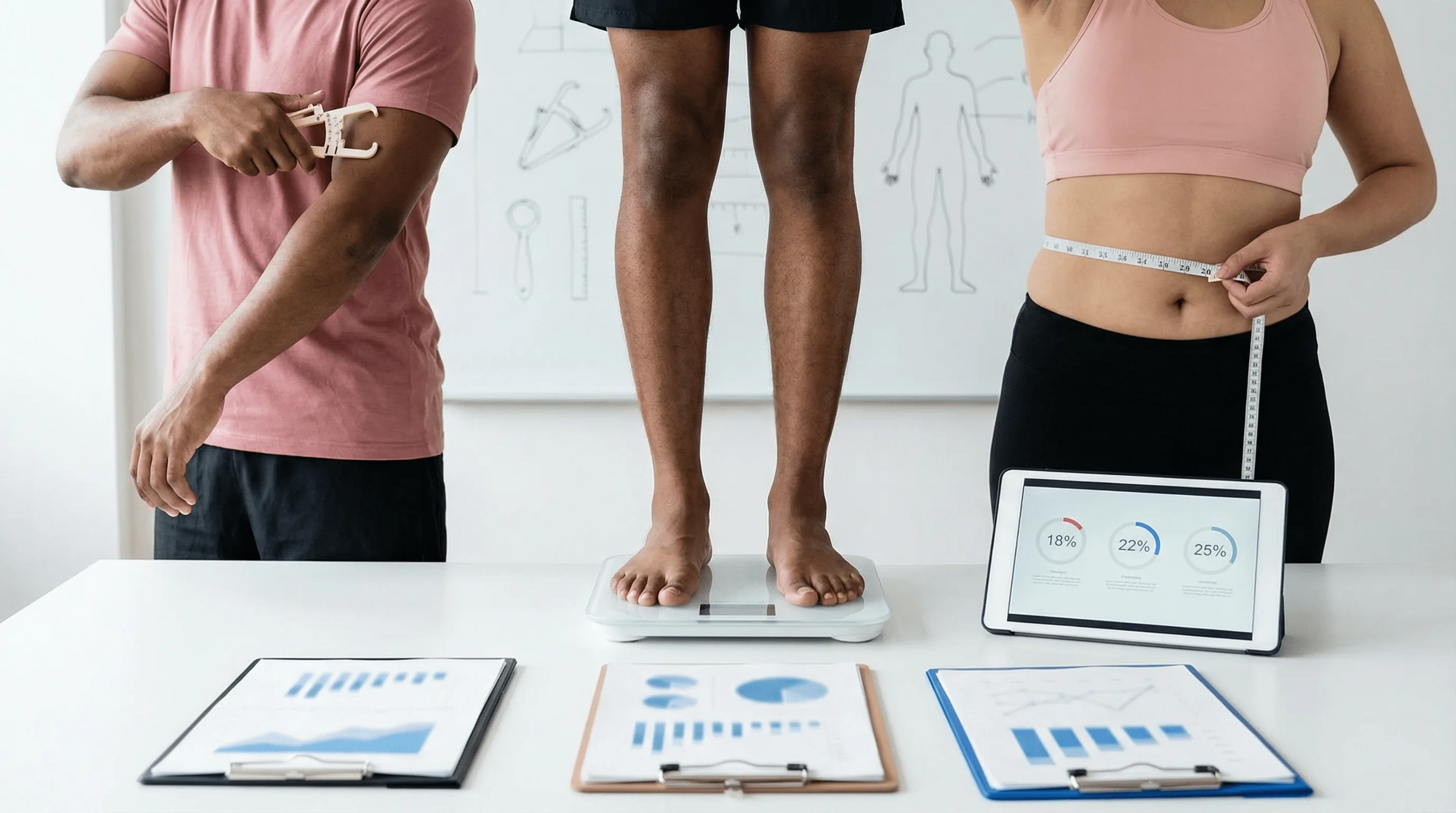
All at-home body fat methods involve tradeoffs. Here’s how AI photo estimation compares:
- Formulas & calculators: fast, but rely on averages
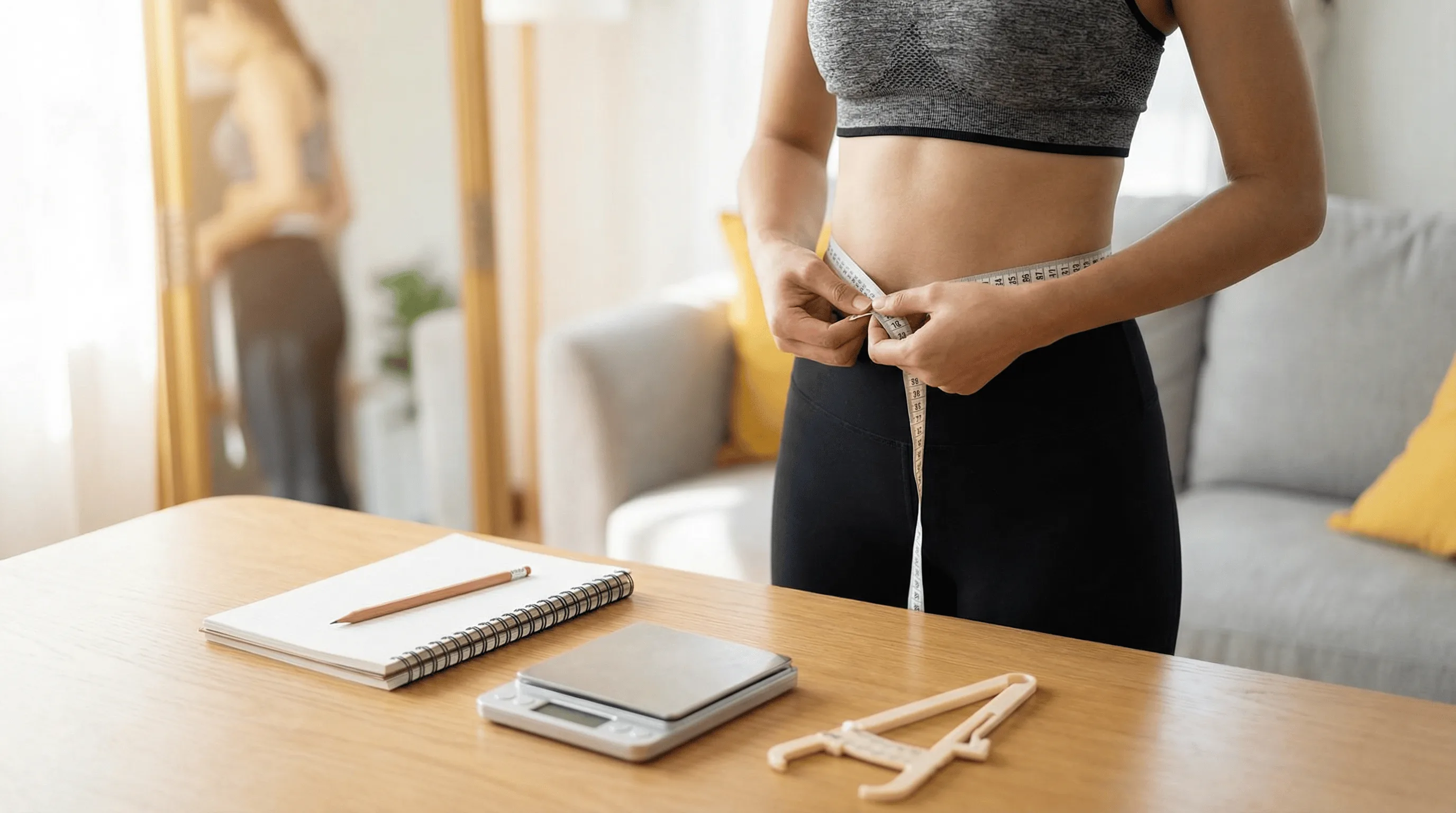
- Tape measurements: repeatable, technique-sensitive
- Smart scales (BIA): convenient, hydration-sensitive
- AI photo estimation: appearance-aligned, consistency-dependent
AI’s advantage is that it measures what people care about most: visible change. You can run a check directly with the Body Fat Estimator.
Limitations to understand
AI body fat estimation is not a medical device. Results can shift based on lighting, posture, camera angle, distance, and clothing.
That’s why it’s best used as a trend-tracking tool — not as a one-off diagnostic.
How to get the most accurate results
- Use the same lighting each time
- Keep camera height and distance consistent
- Use the same pose (front or front + side)
- Avoid loose or bulky clothing
- Track trends over weeks, not days
Use this setup checklist from How to Take Photos for Body Fat Estimation to reduce noise between check-ins.