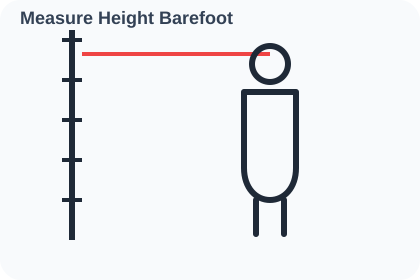
Height
- Stand barefoot against a wall with heels, glutes, and upper back lightly touching.
- Keep eyes forward and head neutral.
- Use a flat object at the top of the head and measure from floor to that mark.
Estimate frame size from height and wrist circumference using a practical height-to-wrist ratio.
Baseline reference for many weight-range charts.
Body frame size here is based on the height-to-wrist ratio. Higher ratios generally indicate a smaller frame, while lower ratios indicate a larger frame.
| RATIO (HEIGHT / WRIST) | FRAME SIZE |
|---|---|
| 0.0-9.6 | Large Frame Often +10% vs medium-frame weight targets. |
| 9.6-10.4 | Medium Frame Baseline reference for many weight-range charts. |
| >10.4 | Small Frame Often -10% vs medium-frame weight targets. |
Body frame size is a skeletal-build classification often used to add context to weight targets, clothing fit, and physique comparisons. This tool estimates frame size from the ratio of height to wrist circumference.
It does not estimate body fat directly. Instead, it helps explain why two people at similar body fat or body weight can still look different.
This calculator uses:
Frame Ratio = Height (cm) / Wrist Circumference (cm)
Women
Small: > 11.0 | Medium: 10.1-11.0 | Large: < 10.1
Men
Small: > 10.4 | Medium: 9.6-10.4 | Large: < 9.6
These thresholds are practical screening ranges. Use them for context, not diagnosis.
This tool uses body-size measurements only and does not require skinfold calipers. Use the same protocol each time for stable results.
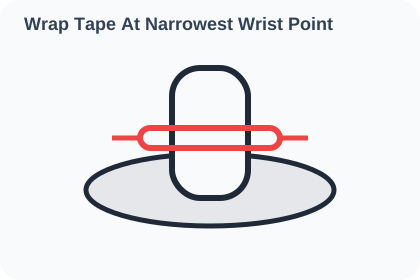
Frame size helps contextualize composition tools. Smaller frames may look softer at the same body fat percentage, while larger frames can appear leaner at similar percentages.
Pair this with the FFMI Calculator and Natty or Not Calculator and Bodybuilding Genetics Calculator and Lean Body Mass Calculator for better body-composition context. For waist-height roundness trends, use the BRI Calculator. For hip-height adiposity context, compare with the BAI Calculator.
Assess waist-to-hip ratio with sex-specific central-fat risk thresholds.
Assess waist-to-height ratio against central-fat risk screening thresholds.
Calculate shoulder-to-waist taper ratio from circumference measurements.
Estimate ideal waist-size targets from height and ratio-based planning bands.