How to Take Photos for Body Fat Estimation

Photo-based body fat estimation works best when photos are taken consistently. The goal isn’t a flattering picture — it’s a repeatable one that lets you interpret change accurately.
What makes a “good” body fat photo
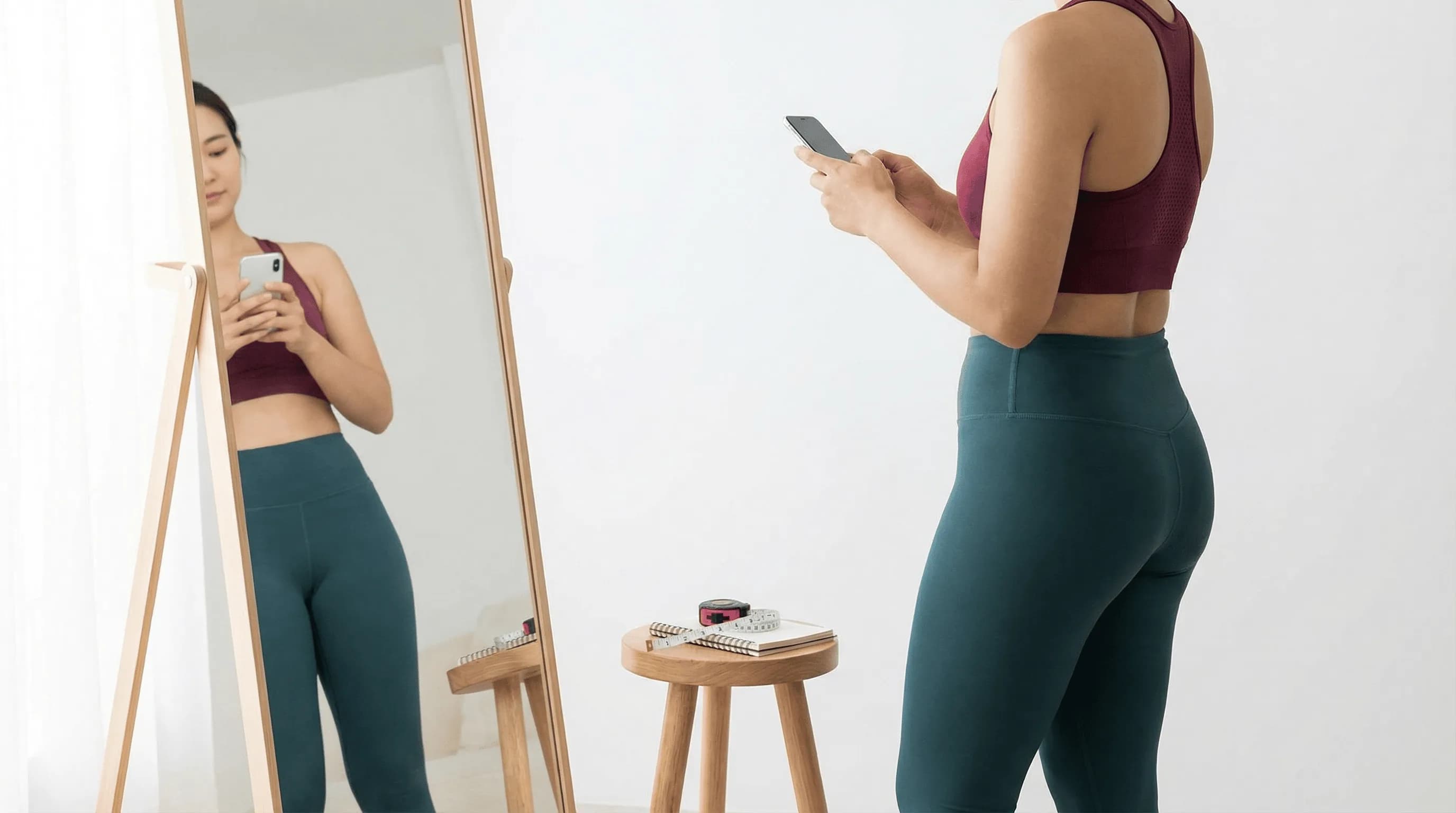
A good body fat photo is not about lighting tricks, flexing, or posing to look leaner. It’s about capturing your body under similar conditions each time so changes reflect reality.
Think of photos as a measurement tool. Consistency matters more than aesthetics.
1) Use consistent lighting
Lighting changes how shadows fall across your body. Overhead lights, side lighting, or sunlight at different times of day can all change how lean you appear.
Pick one lighting setup and stick to it. Neutral, even lighting is better than dramatic lighting.
2) Keep camera height and distance the same
Camera angle affects proportions. A lower camera can exaggerate the torso; a higher camera can make the waist look smaller.
Place the camera at roughly chest height, at a fixed distance, and avoid wide-angle distortion when possible.
3) Use the same pose every time
Subtle posture changes can alter how your body looks. Flexing, sucking in your stomach, or shifting weight changes the signal.
A relaxed front-facing pose works well. Some people also include a relaxed side view for additional context.
4) Wear minimal, consistent clothing
Loose clothing hides body contours. Compression or tight-fitting clothing can distort shape.
Wear similar minimal clothing each time so the outline of your body is visible and comparable.
How often to take body fat photos
Daily photos tend to exaggerate small fluctuations that aren’t real fat changes. Most people get better signal by taking photos every 1–2 weeks.
Spacing photos out helps you focus on meaningful trends rather than noise.
Common mistakes to avoid
- Changing lighting or time of day
- Using different poses or flexing
- Standing closer or farther from the camera
- Switching clothing styles
- Interpreting daily changes as real fat loss or gain
Why this improves estimation accuracy
Photo-based body fat estimation works best when visual noise is minimized. Consistent photos let the estimator focus on real changes in shape and proportions.
Estimate your body fat from a photo →