How Often Should You Measure Body Fat?

Measuring body fat too often creates confusion. Measuring it too rarely makes progress hard to see. The right frequency depends on how body fat actually changes — and how estimation works.
Body fat does not change day to day
Meaningful changes in body fat take time. Losing or gaining actual fat tissue happens over weeks, not overnight.
When numbers change from one day to the next, you’re usually seeing measurement noise — not real progress or regression.
Why measuring too often creates noise
Hydration, food intake, time of day, posture, and measurement setup can all affect body fat estimates. When you measure daily, these small factors dominate the signal.
The result is a graph that looks chaotic — even when your body is changing in the right direction.
How frequency depends on the method
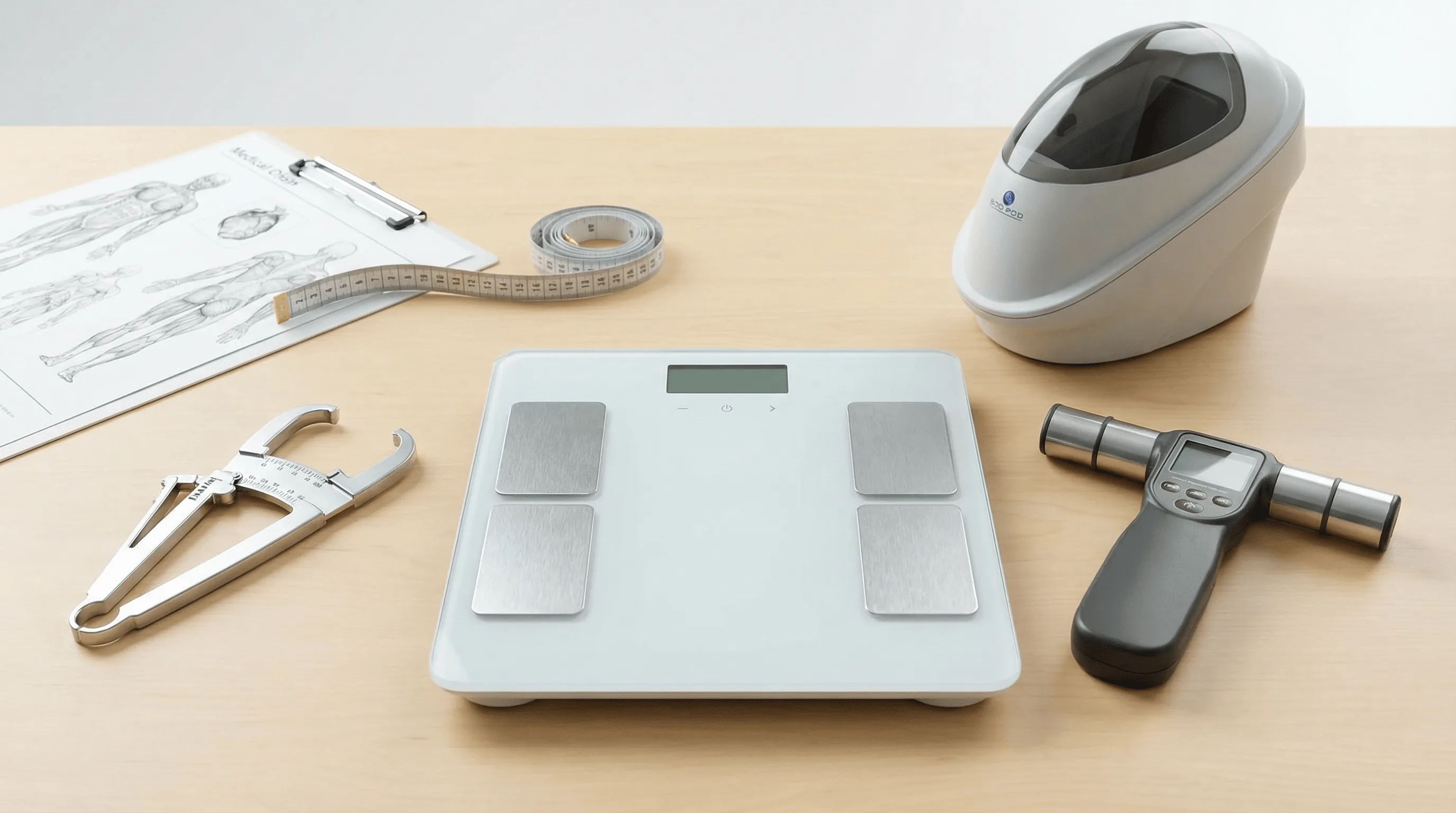
- Smart scales (BIA): can be used more frequently, but only trends matter
- Tape measurements: weekly or biweekly works best
- AI photo estimation: every 1–2 weeks for clear visual comparison
- DEXA scans: infrequent, occasional baselines only
A practical recommendation
For most people, measuring body fat every 1–2 weeks strikes the right balance. It’s frequent enough to show trends, but spaced enough to reduce noise.
If your lifestyle or training is very stable, even once every 3–4 weeks can be sufficient.
If you are running a structured fat-loss phase, pair your check-in cadence with a target timeline or a fasting-day / feeding-day projection and the intermittent fasting protocol estimator so your measurements match an actual plan. To set intake targets for that plan, add the TDEE Calculator and Calorie Deficit Calculator and the Steps to Calories Calculator.
Why photos work especially well over time
Photos naturally encourage spacing. When taken under consistent conditions, they make changes easier to interpret and harder to overthink.
Learn how to take consistent body fat photos →