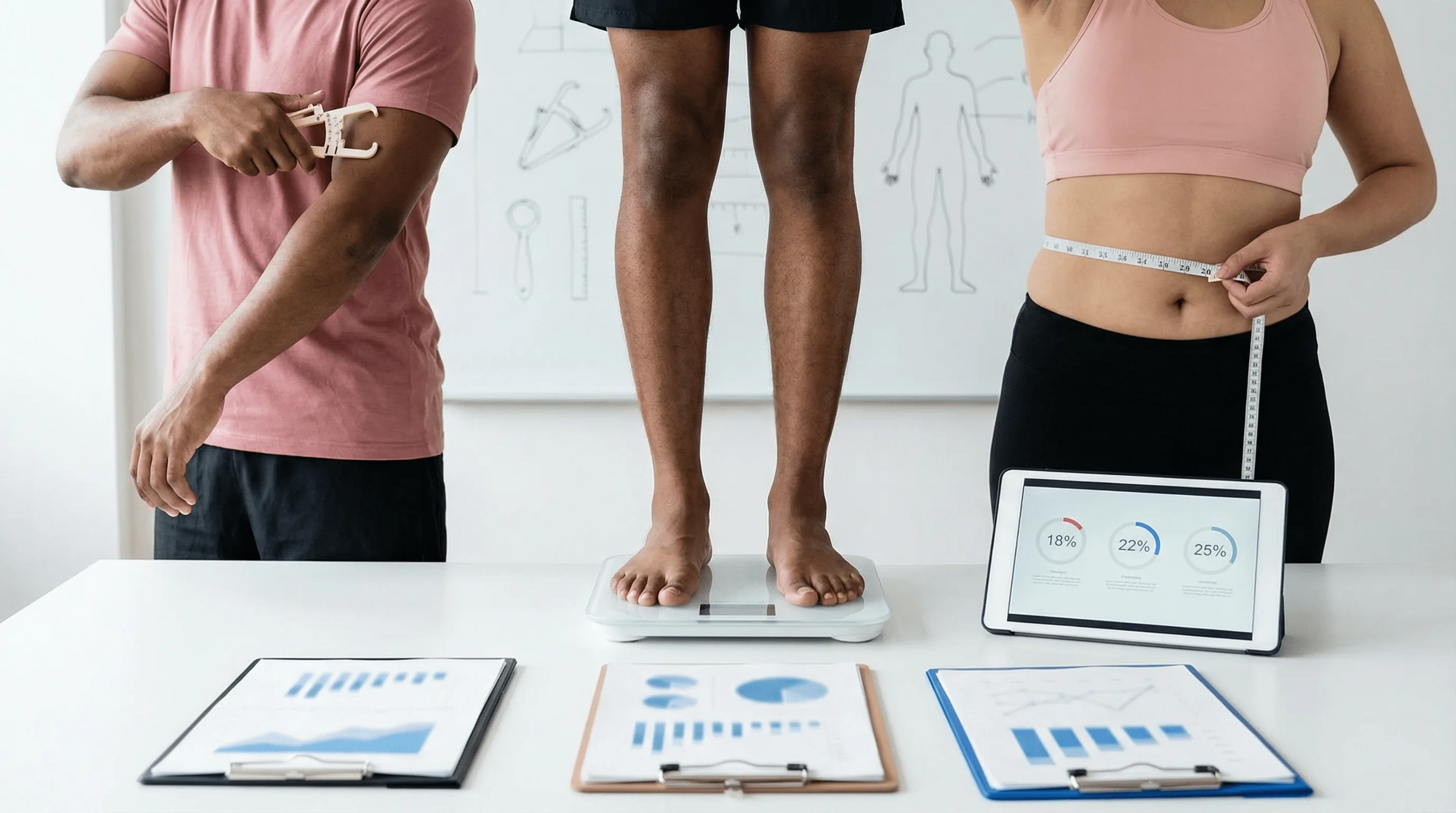
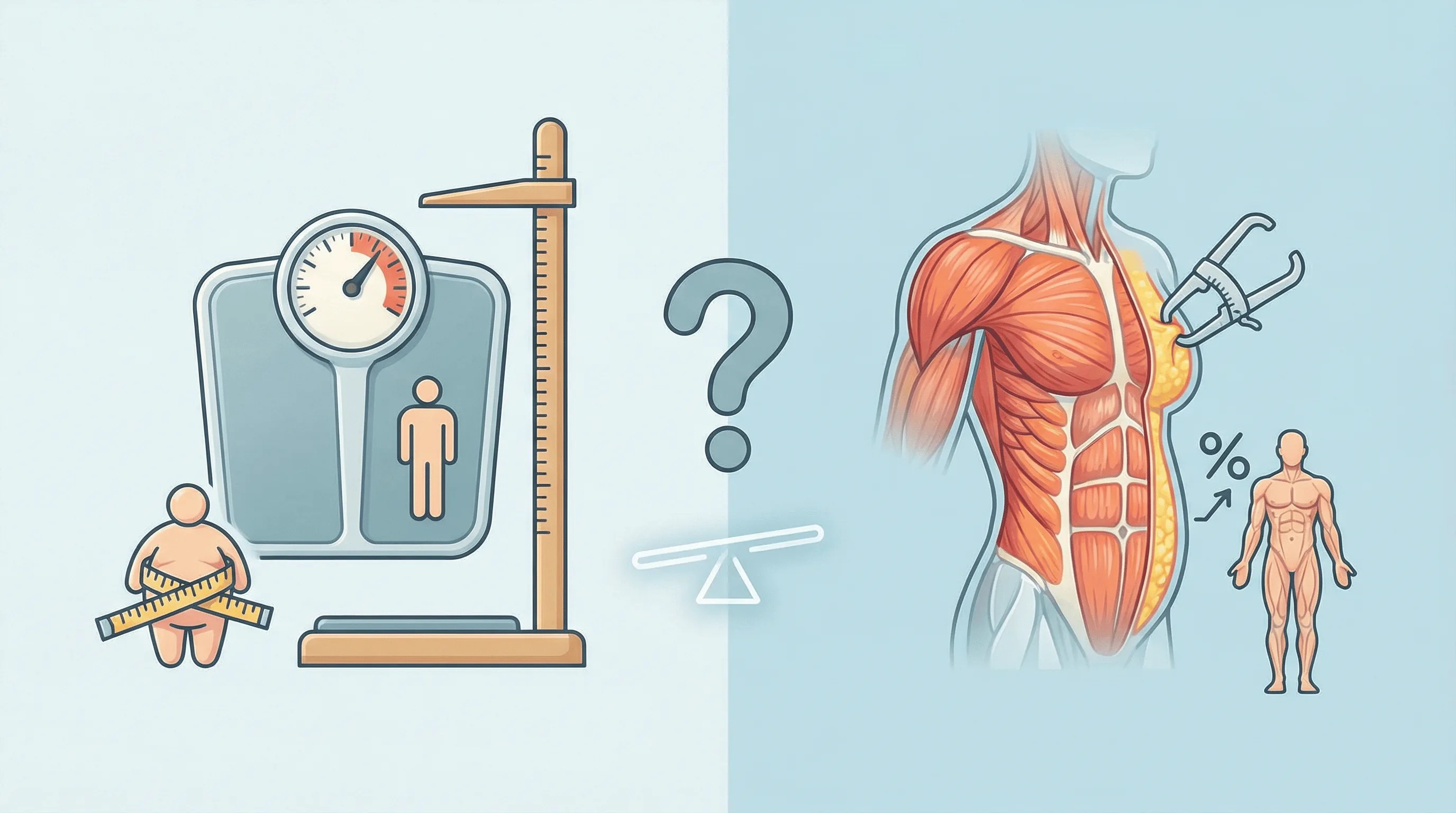
Why Body Fat Estimators Give Different Results

You check your body fat and see 18%. You try another calculator and get 24%. Now you are wondering which one is lying.
Usually, neither. But also, neither is fully accurate. Body fat estimation is inherently noisy because different methods use different assumptions and measurement inputs.
This guide breaks down why numbers diverge, how different methods compare, how wrong estimates can be in practice, and what to do if you want more reliable progress tracking.
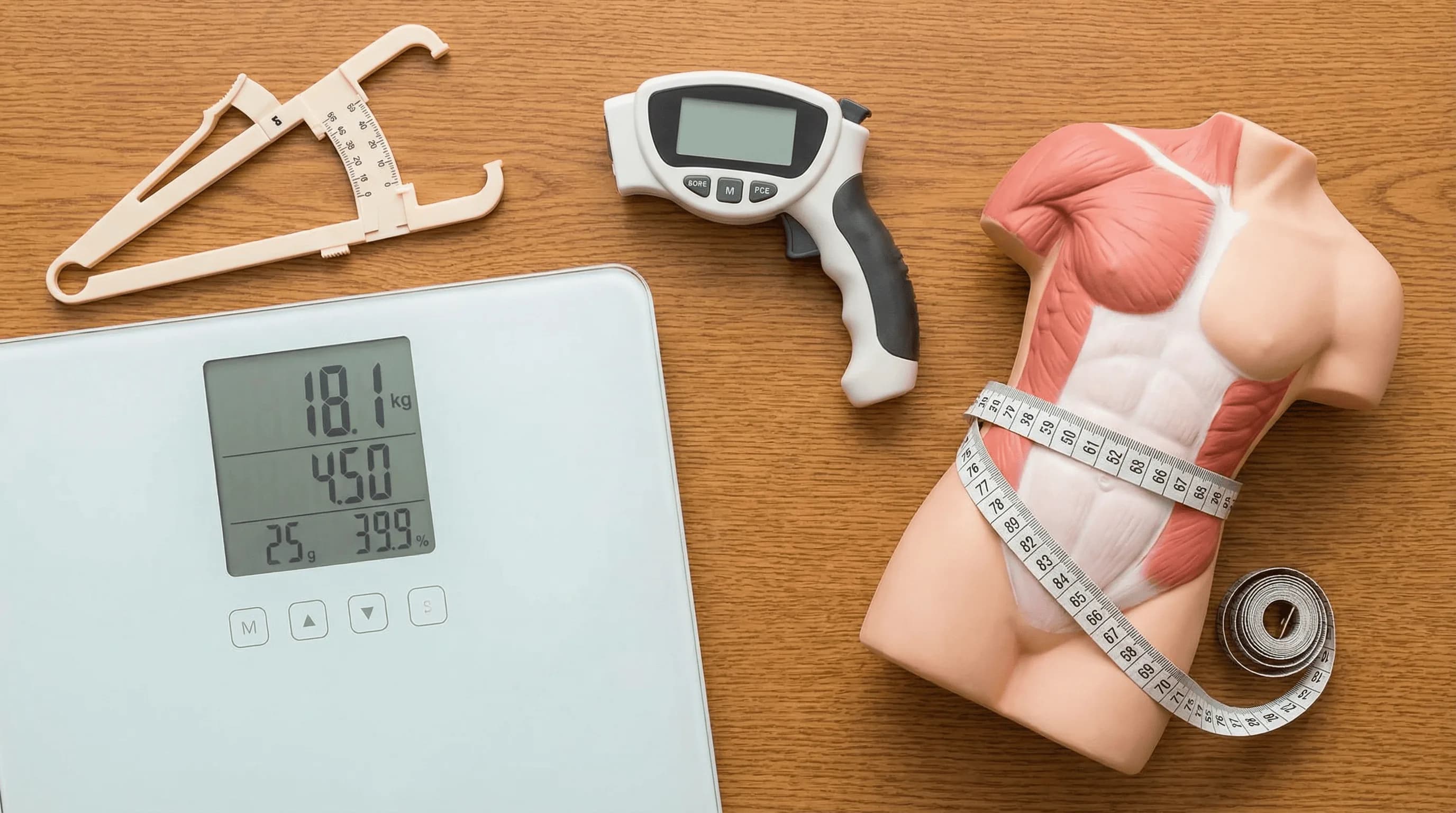
Body fat calculators do not measure fat directly
Most tools estimate body fat indirectly from formulas or proxy inputs. They are not directly measuring fat tissue the way lab imaging methods try to do.
That means two methods can disagree even when both are working as intended. The disagreement is often about assumptions and conditions, not about one method being broken.
How Different Methods Compare
Different methods use different signals, so they fail in different ways. The table below gives a practical view of why numbers often diverge.
| Method | Typical Error | Pros | Cons |
|---|---|---|---|
| DEXA scan | Often ±2-4% | Detailed regional breakdown and useful baseline | Expensive, not always accessible, still influenced by hydration and protocol |
| Bioelectrical impedance (smart scale) | Commonly ±3-8% | Fast, cheap, easy to repeat | Sensitive to water, sodium, carbs, and measurement timing |
| Navy/circumference formulas | Often ±3-5% in average populations | Simple and accessible with tape measurements | Assumes average fat distribution and average muscularity |
| Skinfold calipers | Often ±3-7% with good technique | Low cost and fairly repeatable when performed consistently | Operator skill matters a lot and self-measurement is difficult |
| Visual/photo-based estimation | Varies by image quality and model | Aligns with appearance-based goals and progress photos | Affected by lighting, pose, camera angle, and clothing |
1) Formula assumptions
Formula-based tools are built on population averages. They assume typical relationships between height, weight, circumferences, and fat distribution.
In the real world, people are not average. A muscular lifter at 80 kg may be flagged as overfat by a formula trained on more sedentary populations. A person with lower muscle mass may appear leaner on paper than they look in the mirror.
This can push people toward the wrong decisions, like setting calories too low or overestimating progress. Two calculators can both be valid yet still disagree because they encode different assumptions.
2) Hydration, food, and timing
Smart scales are highly sensitive to fluid balance. A salty dinner, high-carb refeed, poor sleep, or hard workout can shift water retention enough to change your estimated body fat reading by several points.
Even formula-based methods are indirectly affected. Your morning and evening body weight or waist measurement can differ from water, food volume, and bloating, even when body fat itself has not changed.
Day-to-day swings usually reflect conditions, not real fat gain or loss.
If hormones, recovery, or supplementation are part of your health context, NuGeneLabs can help you explore testing and protocol options to discuss with your clinician.
3) Measurement noise
Tiny technique differences can create big output changes. Measuring waist at the navel versus slightly above it, pulling tape a little tighter, or holding a different breath state can shift circumference values noticeably.
Skinfold calipers have the same problem. Pinch location, pressure, and tester skill all affect readings. Once that noisy input enters a formula, the final body fat percentage can jump more than you would expect.
How Wrong Can Body Fat Estimates Be?
For at-home methods, a spread of roughly 3-8 percentage points is common. That means a 15% reading on one method and a 20% reading on another is not unusual.
Even DEXA, often treated like a gold standard, can vary based on hydration, machine calibration, software version, and scan protocol.
- Single reading = rough estimate
- Repeated readings under controlled conditions = useful trend
- Method-to-method differences of a few points = normal
A Simple Rule for Tracking Body Fat
- Use one primary method instead of jumping between tools.
- Measure under similar conditions (time of day, hydration, meal timing).
- Track week-to-week trend, not single-day numbers.
- Pair body fat readings with photos, body weight, and performance markers.
For practical tracking, use this guide on how to track body fat over time and combine it with structured intake planning from the Calorie Deficit Calculator or Weight Loss Calculator.
If you also want context on muscle potential, pair body fat with an FFMI Calculator so you can separate fat-loss progress from lean-mass changes.
When Visual Change Is the Goal, Use Visual Tracking
If your goal is to understand how you actually look, not just what a formula predicts, appearance-based estimation is often more useful.
That is exactly what our Body Fat Estimator is built for. It analyzes visual body cues from photos instead of relying only on population-average equations.
Estimate your body fat from a photo →FAQ
Why do body fat calculators give different results?
Different tools use different formulas, assumptions, and input signals. If the method changes, the estimate usually changes too.
Which body fat method is most accurate?
DEXA is often used as a high-quality reference, but it is still not perfect. For most people, consistency of method and conditions matters more than chasing a single perfect reading.
Can body fat change daily?
Meaningful fat change does not happen overnight. Daily shifts are usually water, food volume, glycogen, and measurement noise.
Bottom Line
The goal is not to find a perfect number. The goal is to understand your direction.
Body fat percentage is an estimate, not an absolute truth. People who make the best progress stop chasing precision and start tracking consistency.