How AI Body Fat Estimation Works

An AI body fat estimator doesn’t “measure” fat the way a scan does. Instead, it analyzes visual patterns in photos to estimate body fat percentage directionally — similar to how experienced coaches make visual assessments.

What an AI body fat estimator actually does
An AI body fat estimator uses computer vision to analyze visible characteristics in a photo — things like body proportions, overall silhouette, and fat distribution patterns.
It does not measure fat directly. Instead, it estimates where someone likely falls within a body fat range based on learned visual relationships.
A high-level explanation (no technical jargon)
At a high level, the AI has learned how different body fat levels tend to look across many examples. When you upload a photo, it compares visual cues in your image to those learned patterns.
Think of it as a very consistent visual observer — not a medical device, but a pattern recognizer trained on body composition appearance.
AI is increasingly being applied across many areas of everyday life, from body composition tracking to productivity and communication tools. For a plain-English breakdown of today's most widely used AI platforms, Your Tech Compass covers tools like ChatGPT, Claude, DeepSeek, and Gemini in accessible, practical terms.
What the AI looks at in a photo
- Overall body shape and silhouette
- Relative proportions (torso, limbs, waist)
- Visible fat distribution (where softness appears)
- Contrast between muscle contours and fat
These cues are similar to what humans use when visually estimating body fat — just applied consistently.
What the AI intentionally ignores
- Your scale weight
- BMI or height-weight formulas
- Fitness claims or labels
- Medical data or diagnoses
This is deliberate. Appearance-based estimation works best when it’s not constrained by population averages or assumptions.
Why photo-based estimation works directionally
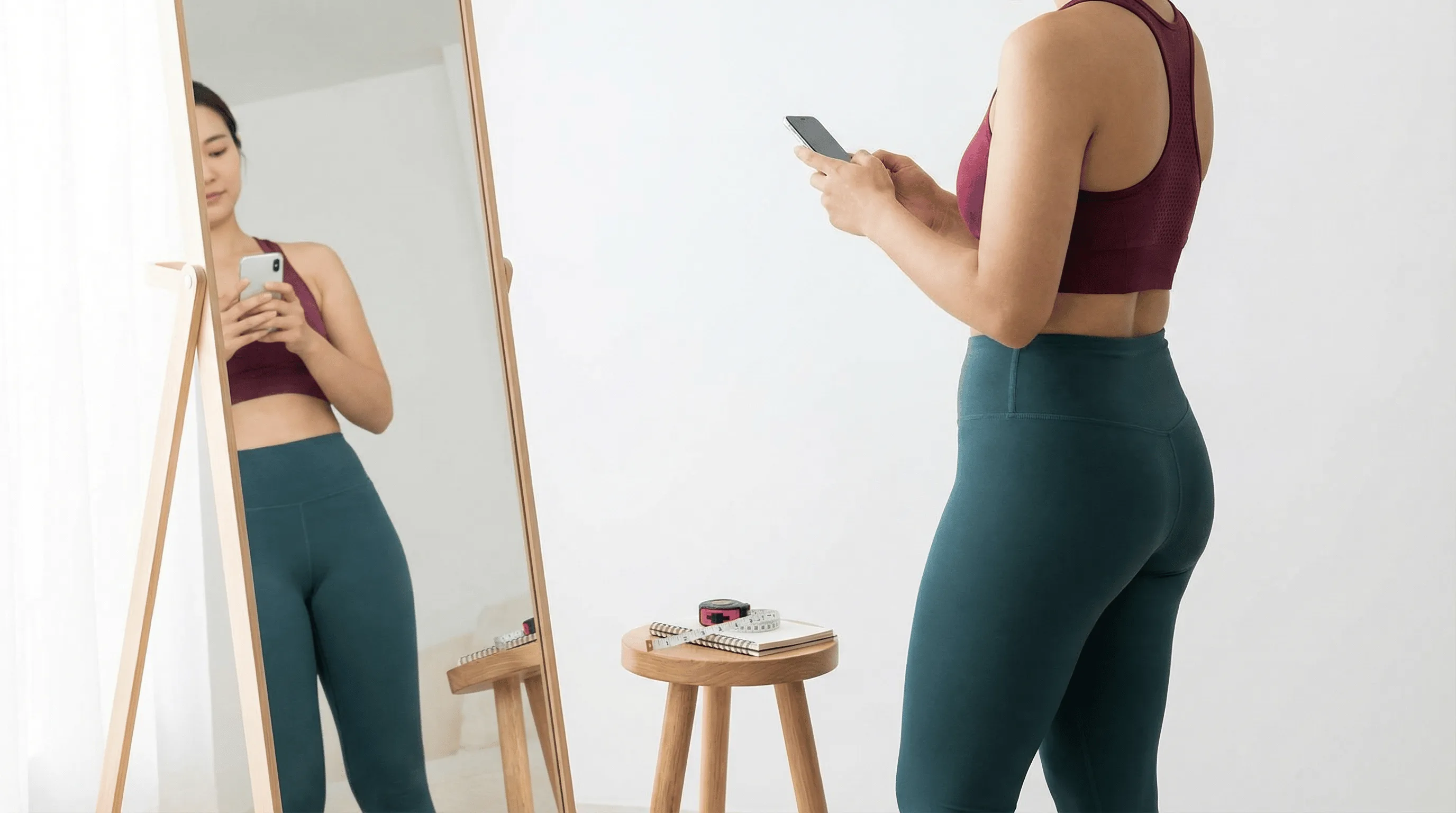
Photos capture the thing most people actually care about: how their body looks. While photos aren’t perfect, they’re surprisingly useful when taken under similar conditions.
When lighting, posture, and camera setup stay consistent, changes in appearance often reflect real changes in body composition — even if the exact percentage isn’t precise.
Limitations to understand
Like all at-home body fat estimation methods, AI photo estimation has limitations. How accurate AI estimation is can shift based on lighting, pose, camera angle, distance, and clothing.
That’s why this tool works best as a repeatable reference — not a one-time truth.
How to get the most accurate results
- Use the same lighting each time
- Keep the camera at the same height and distance
- Use the same pose (front or front + side)
- Avoid loose or bulky clothing
- Track trends over weeks, not days