Why Body Fat Calculators Are Inaccurate

Body fat calculators look scientific. You enter a few numbers, press a button, and get a percentage — sometimes down to a decimal point.
That precision is mostly an illusion. This guide explains why body fat calculators are often inaccurate, what they’re actually doing under the hood, and when they’re (barely) useful.
What a body fat calculator actually does
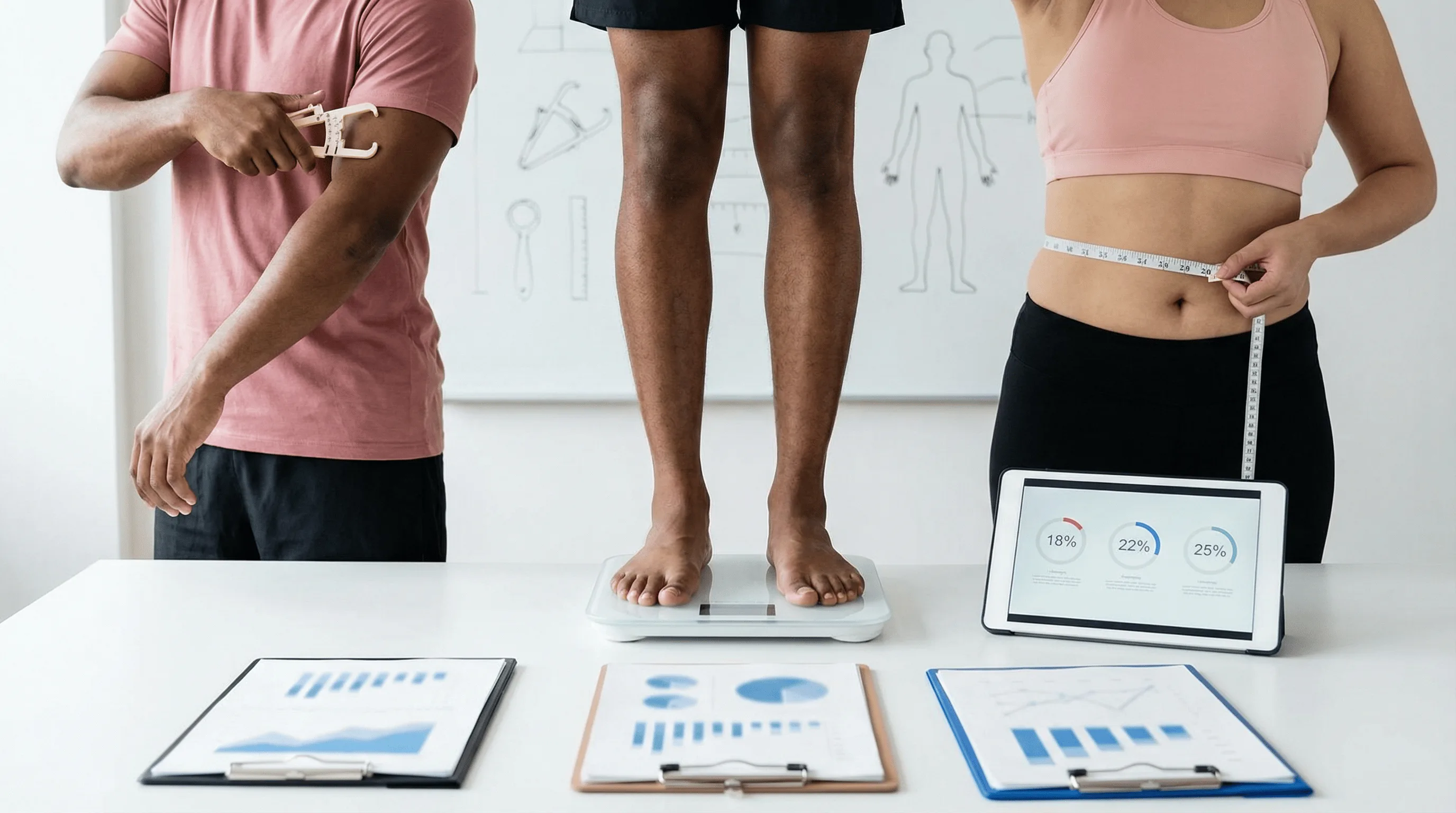
Most body fat calculators do not measure body fat. They estimate it indirectly using population-based formulas. If you want the full method comparison, start with Body Fat Calculator vs Body Fat Estimator.
Typical inputs include height, weight, age, sex, and sometimes waist or neck measurements. Those numbers are plugged into a statistical model derived from large datasets.
The result is an inference — not a measurement of fat tissue in your body.
The core problem: averages don’t describe individuals
These formulas work reasonably well when describing large groups of people. They break down when applied to individuals.
Two people with the same height, weight, and waist measurement can have dramatically different body compositions — especially when muscle mass enters the picture.
Muscle mass breaks most calculators
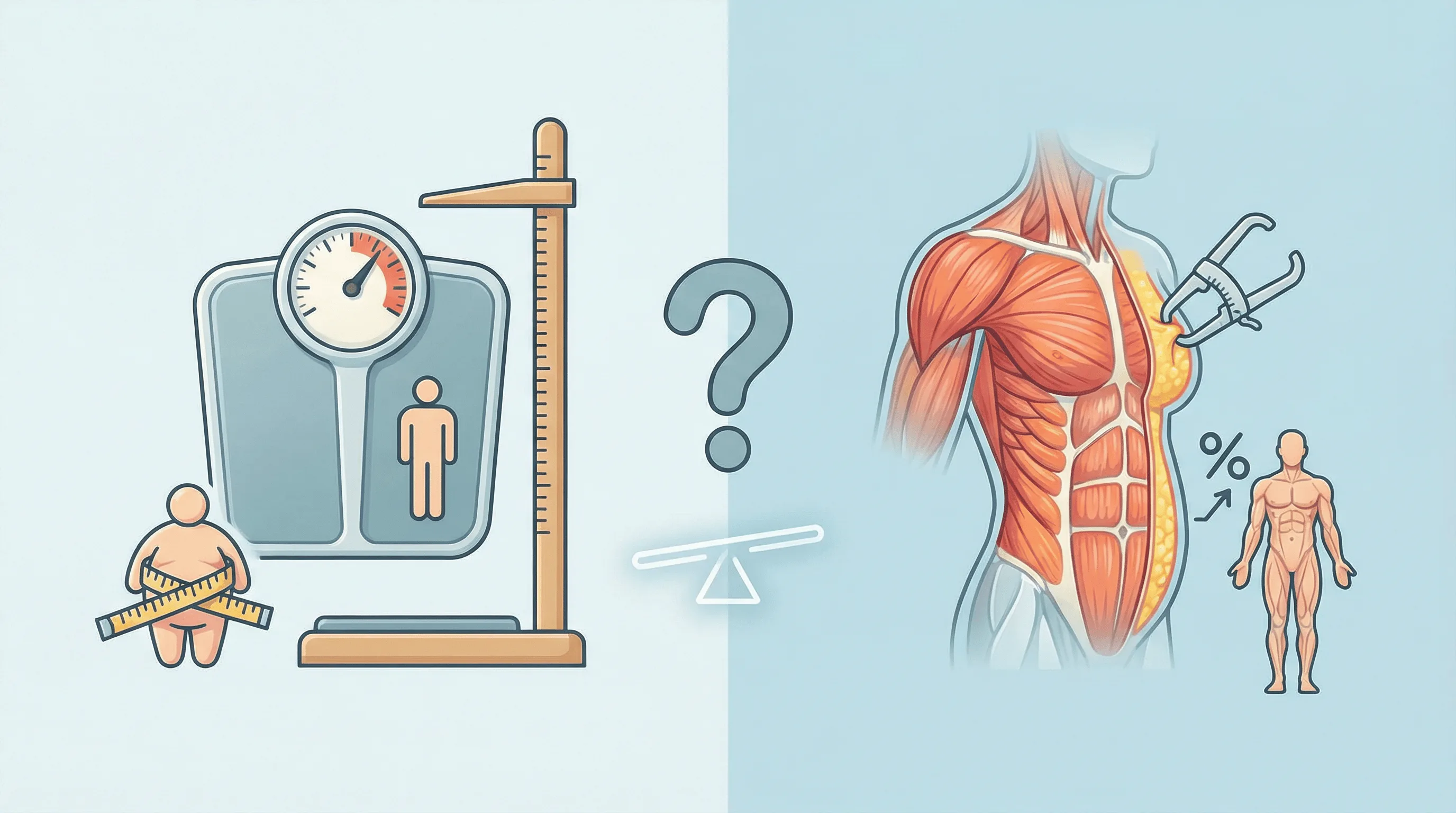
Muscle is dense. Fat is bulky. A muscular person and a sedentary person can weigh the same and still differ by 10+ percentage points in actual body fat.
Most calculators cannot detect muscle mass. As a result, they often overestimate body fat for trained individuals and underestimate it for people with low muscle mass.
Small measurement errors create big swings
Many calculators rely on tape measurements like waist or neck circumference. A difference of just 1–2 cm can shift results by several percentage points.
Posture, breathing, tape placement, and time of day all introduce noise. The calculator reports a new “body fat percentage,” even though nothing meaningful changed.
Fat distribution varies more than formulas assume
Some people store fat centrally (abdomen), others peripherally (hips, thighs, legs). Most calculators assume a generic pattern.
If your fat distribution differs from the model, the estimate will be skewed — often in ways that don’t match how you actually look.
Precision is not the same as accuracy
A result like “21.6% body fat” looks authoritative. In reality, the true value could plausibly sit anywhere within a wide range.
Decimal points add confidence, not correctness.
When body fat calculators are (somewhat) useful
Calculators can be marginally useful if you use the same method consistently and focus only on direction, not absolute values.
- Use the same calculator every time
- Ignore single readings
- Watch long-term trends only
What works better for most people
Most people experience body composition visually — in mirrors, photos, and clothing fit — not through formulas.
Visual estimation combined with consistency and trend tracking often aligns better with real-world progress. You can test this flow with the Body Fat Estimator.