How Accurate Are Smart Scales?

Smart scales promise quick body fat percentages with a single step. But if you’ve ever seen your body fat jump or drop overnight, you’ve probably wondered how accurate they really are.
This guide explains how smart scales estimate body fat, why their results fluctuate so much, and how to use them correctly — without misinterpreting the numbers.
What smart scales actually measure
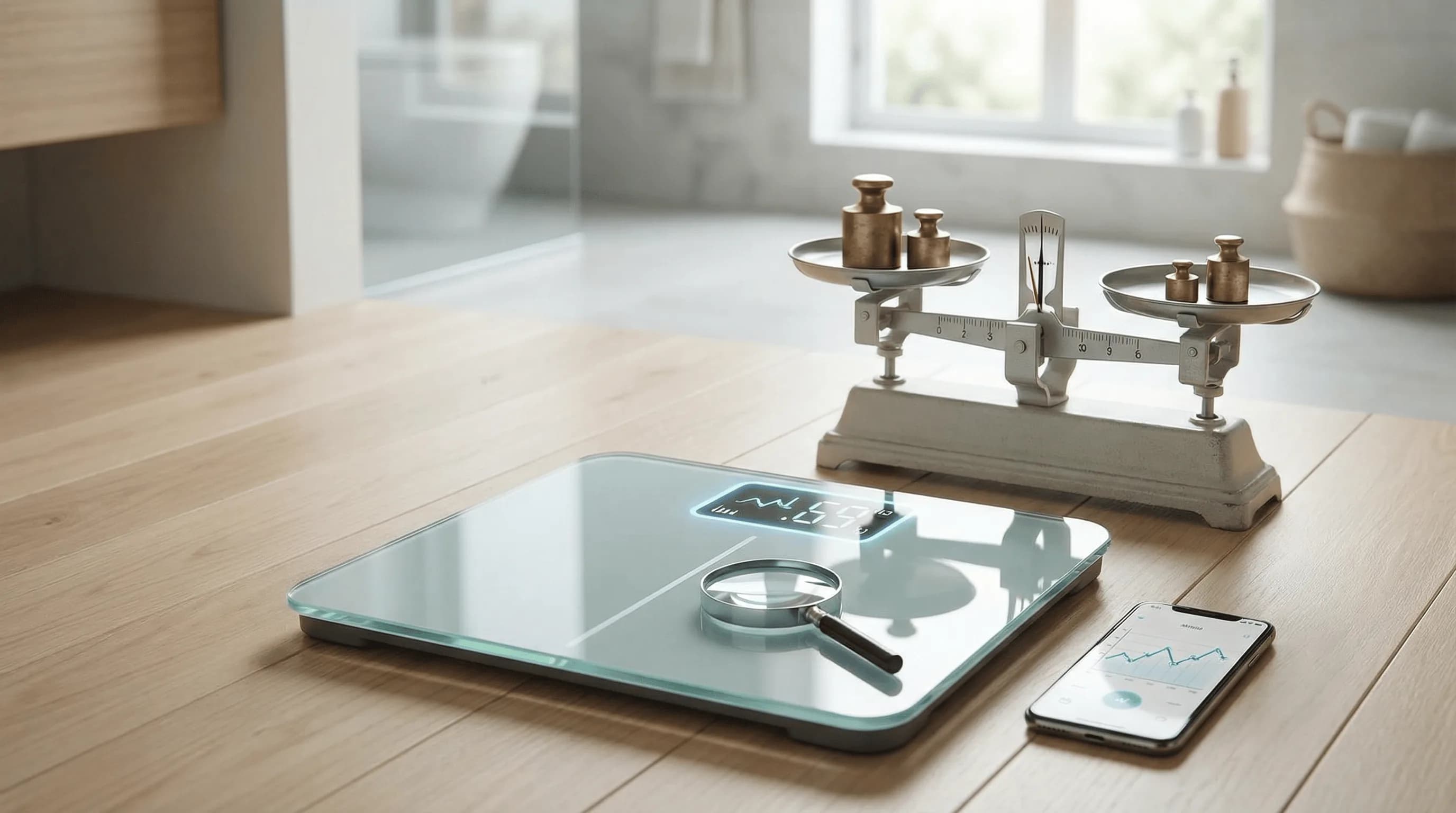
Smart scales do not measure body fat directly. Instead, most use a method called bioelectrical impedance analysis (BIA).
BIA sends a very small electrical current through your body and measures how easily it travels. Because water conducts electricity better than fat, the scale estimates body composition based on resistance.
The key word is estimate. The scale is inferring body fat using assumptions — not observing fat tissue.
Why smart scale body fat changes overnight
The biggest limitation of smart scales is sensitivity. Because BIA depends heavily on body water, small day-to-day changes can cause large swings in reported body fat.
- Hydration: drinking more water often lowers the reading
- Food intake: glycogen and sodium affect water retention
- Exercise: sweating temporarily increases impedance
- Time of day: morning vs evening can differ noticeably
- Foot contact: dry skin or positioning changes results
This is why someone can appear leaner in the mirror while their smart scale says they gained body fat.
Accuracy vs consistency (the real issue)
When people ask if smart scales are “accurate,” they usually mean one of two things — even if they don’t realize it.
- Accuracy: does the number match your true body fat?
- Consistency: does the number change when your body changes?
Smart scales often struggle with accuracy. The absolute number can be off by several percentage points. Consistency can be decent — but only under tightly controlled conditions.
When smart scales are useful
Smart scales can be useful if you treat them as a trend tool, not a truth machine.
- Weigh at the same time each day (ideally mornings)
- Focus on multi-week trends, not single readings
- Ignore small day-to-day fluctuations
- Use alongside photos or measurements for context
To quantify progress cleanly from your scale logs, use the Weight Loss Percentage Calculator.
Smart scales vs other body fat methods
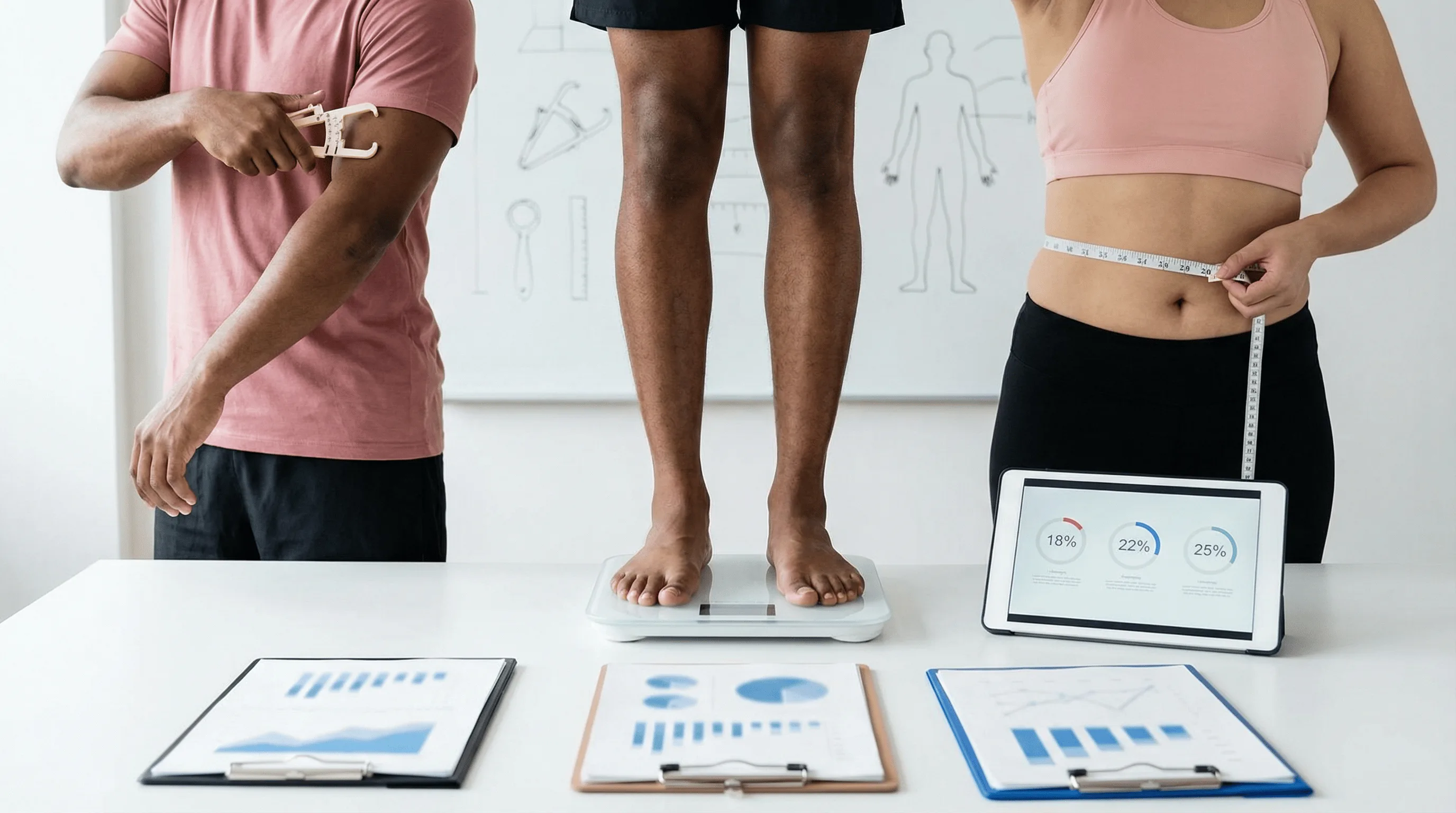
Compared to other methods, smart scales sit at the convenience end of the spectrum — not the precision end.
- DEXA scans: more accurate, but expensive and infrequent
- Tape or Navy method: formula-based, assumption-heavy (compare with the Body Fat Calculator)
- BRI: waist-height roundness estimate (try the BRI Calculator)
- BAI: hip-height adiposity estimate (try the BAI Calculator)
- Lean mass equations: fast height/weight estimates (try the Lean Body Mass Calculator)
- BMI screening: quick category context from height and weight (try the BMI Calculator)
- Timeline planning: estimate pace to target weight (try the Weight Loss Calculator)
- Calorie planning: estimate maintenance and set intake targets (try the TDEE Calculator and Calorie Deficit Calculator and the Steps to Calories Calculator)
- Skinfold calipers: site-based fat-thickness estimates (try the Skinfold Body Fat Calculator)
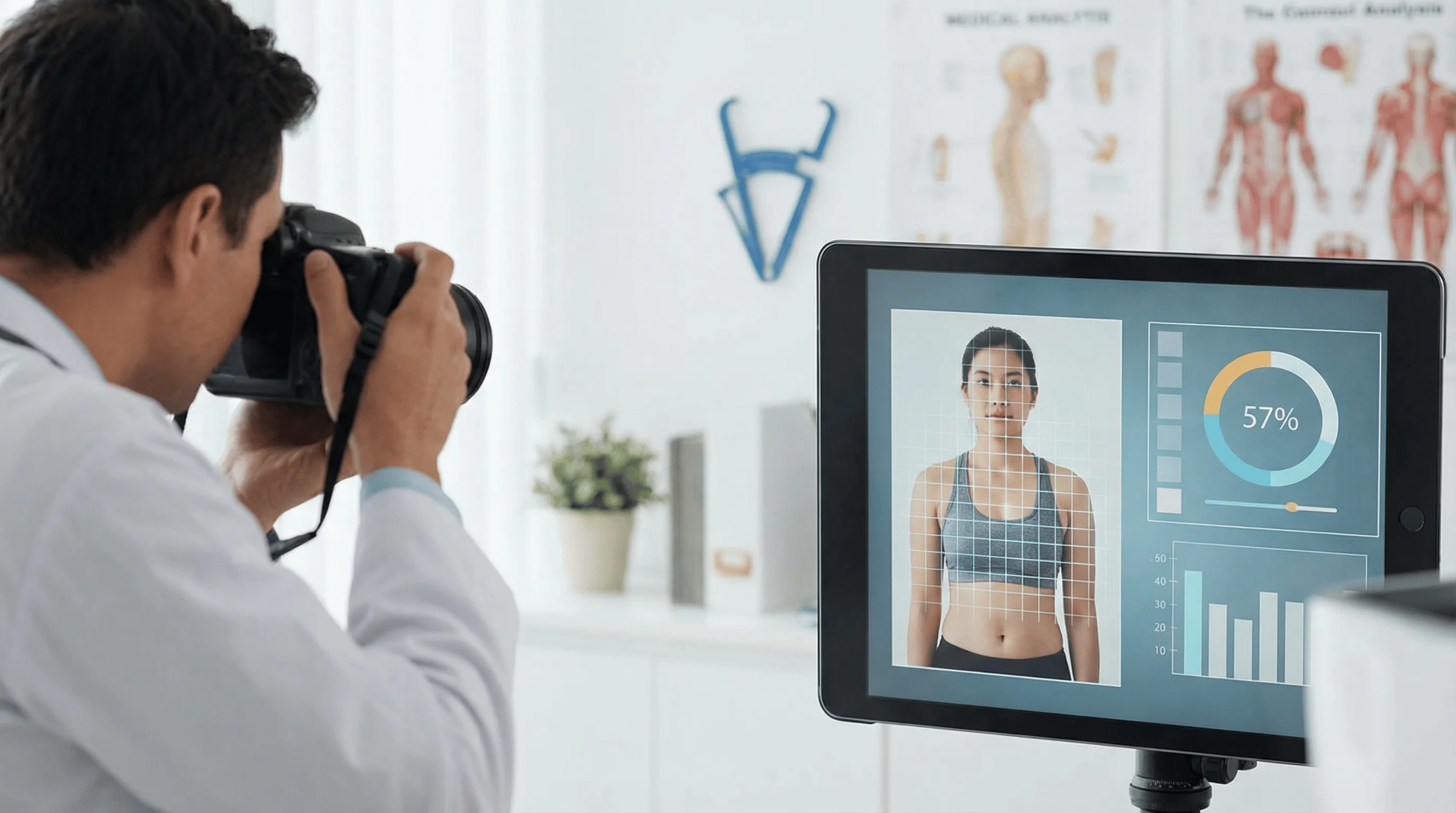
- Photo-based estimation: aligns better with appearance
- Smart scales: easy, but noisy
So, how accurate are smart scales?
Smart scales are directionally useful but numerically unreliable. They can help you notice long-term change, but the exact percentage should be treated with skepticism.
If your goal is understanding how your body actually looks and changes, combining visual context with consistent tracking usually beats relying on a single device. If your estimates disagree, this guide explains why: Why Body Fat Estimators Give Different Results.